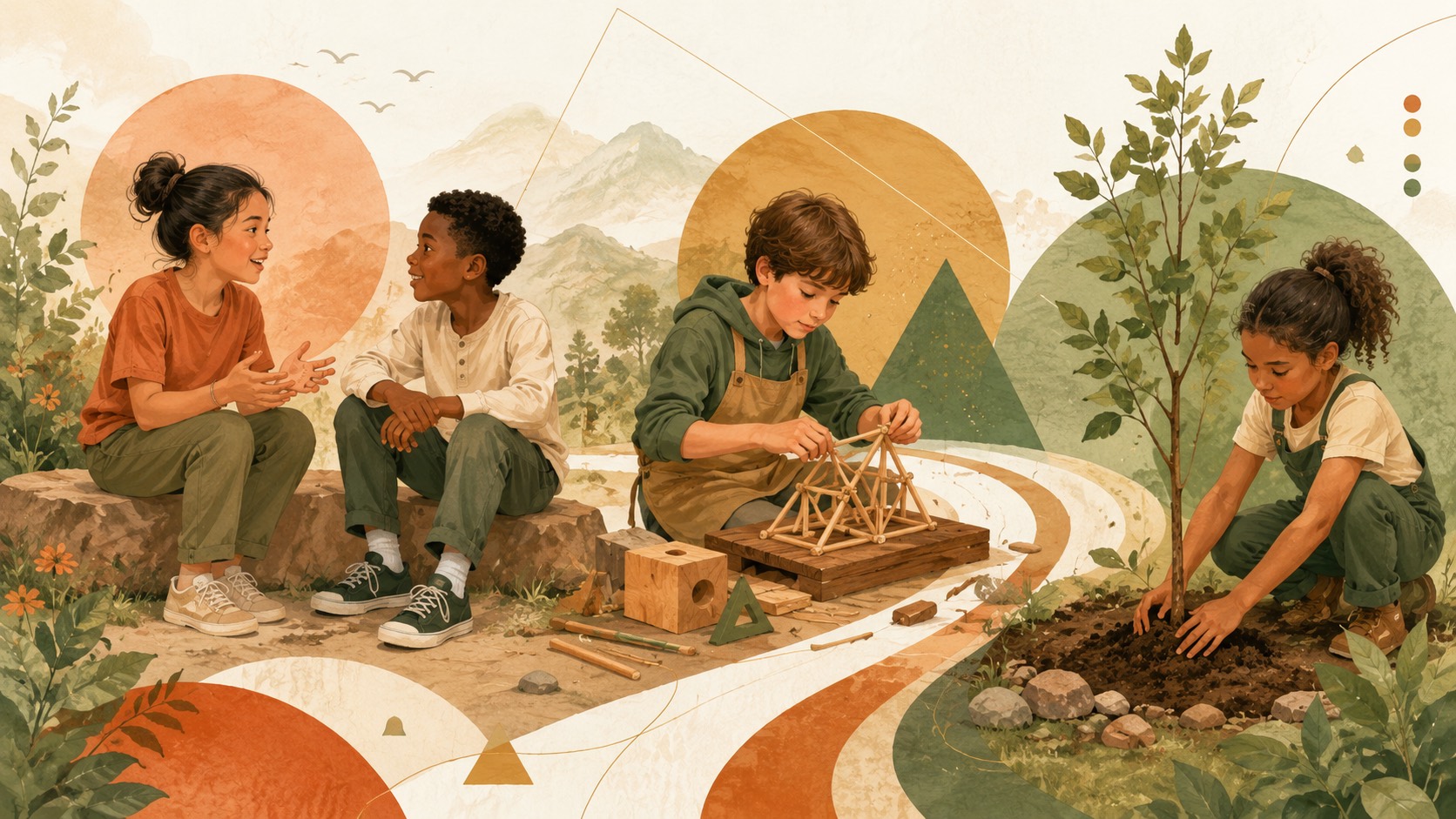
Our Framework
The BTFL Framework
How we build future-ready children through Connect, Create, and Contribute.
Our Framework
How we build future-ready children through Connect, Create, and Contribute.
The challenge
In the world your child is growing into, knowledge is everywhere and answers are free. What used to be the foundation of a good education — facts, formulas, the right answer — is increasingly something a machine can deliver in seconds.
What machines cannot deliver is a child who knows how to connect with others, create something new, and contribute to the world around them.
BTFL exists to fill that gap. Not with more classes, more screens, or more content. With a structured, observable, real-world developmental journey grounded in how children actually grow.
The BTFL Framework draws on more than a century of established research in how human capabilities develop, combined with our founding team’s direct experience in scientific inquiry, classroom teaching, leadership development, and team culture. We do not invent new theory. We organise proven ideas into a coherent system designed for the children of today.
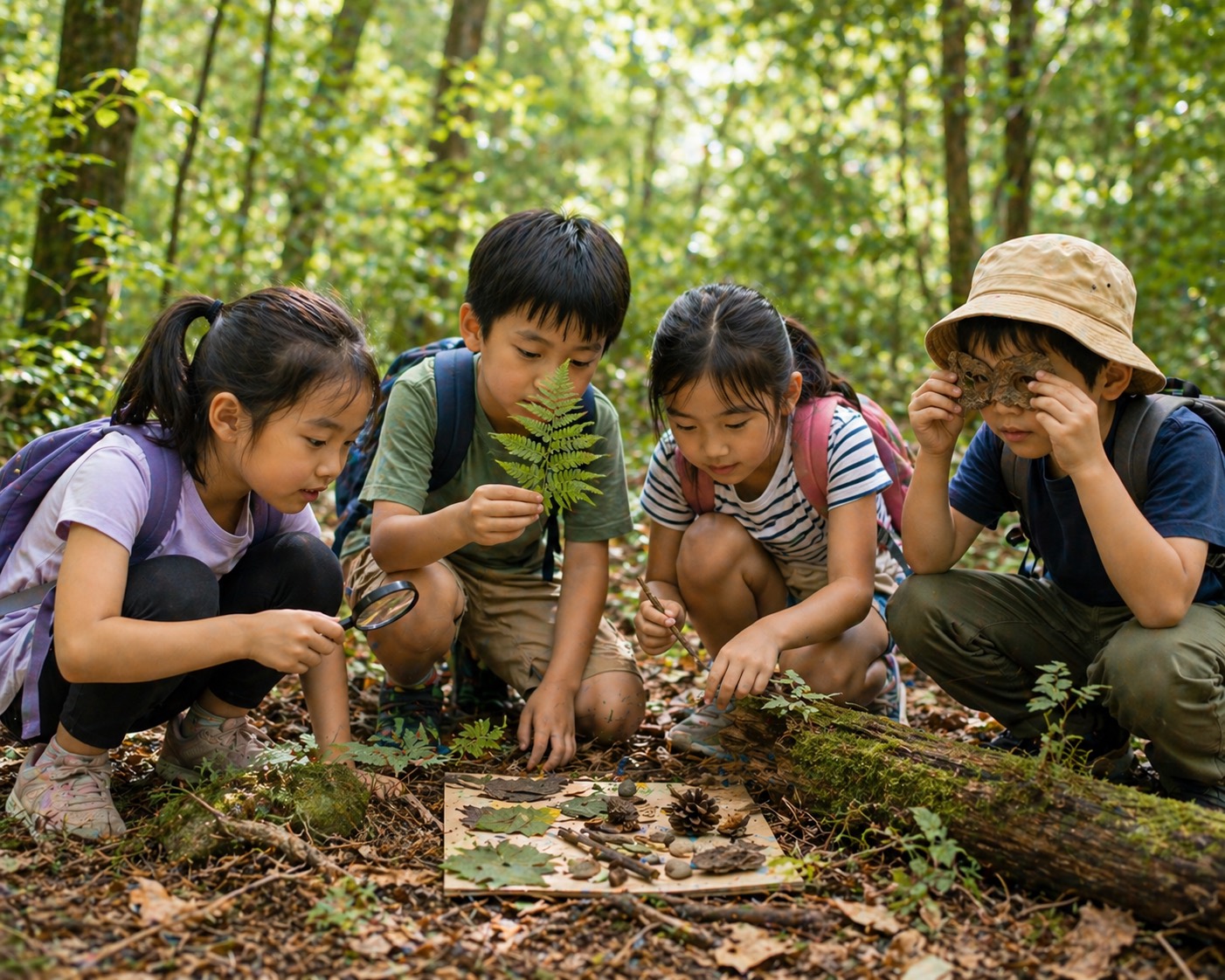
John Dewey argued that genuine learning happens when children act in the real world and reflect on what they experienced. David Kolb later formalised this into the experiential learning cycle: experience, reflection, understanding, experimentation.
Carol Dweck’s work on growth mindset showed that children who believe abilities grow through effort outperform those who see abilities as fixed. BTFL celebrates effort, learning, contribution, and mistakes as material for growth.
Amy Edmondson’s research shows that psychological safety predicts how well teams perform. Children need the same conditions. BTFL Adventures begin with connection before content, and children are never publicly shamed or forced to perform.
The OECD Future of Education and Skills 2030 framework names capabilities such as creating new value, taking responsibility, reconciling tensions, and student agency. These map directly to human connection, entrepreneurial creation, and meaningful contribution.
The 70-20-10 model — developed at the Center for Creative Leadership by Morgan McCall, Michael Lombardo and Robert Eichinger — suggests most capability development comes from doing real things, learning with and from others, and only then formal instruction. BTFL is built around real-world action, not lectures, worksheets, or screen simulations.
Connect. Create. Contribute.
The framework organises everything we develop in children into three pillars. Each pillar reflects a fundamental capacity human beings need to thrive, and each is structured into three sub-pillars that make growth teachable, observable, and trackable.
Individual real-world experiences across the three pillars.
A living document — physical and digital — that travels with the child for their whole BTFL expedition.
Periodic check-ins where the founders refresh the Passport, reset the Route, and meet the parent face-to-face.
This is a slow document. It's the opposite of a school report. We're not measuring your child. We're noticing them.

The human pillar. Children develop the inner and interpersonal capacities to navigate themselves, work with others, and make sense of the world around them.
Why it matters: In a world of constant change, stability must come from within. In a world of fading human connection, the ability to relate is becoming rare — and therefore valuable.
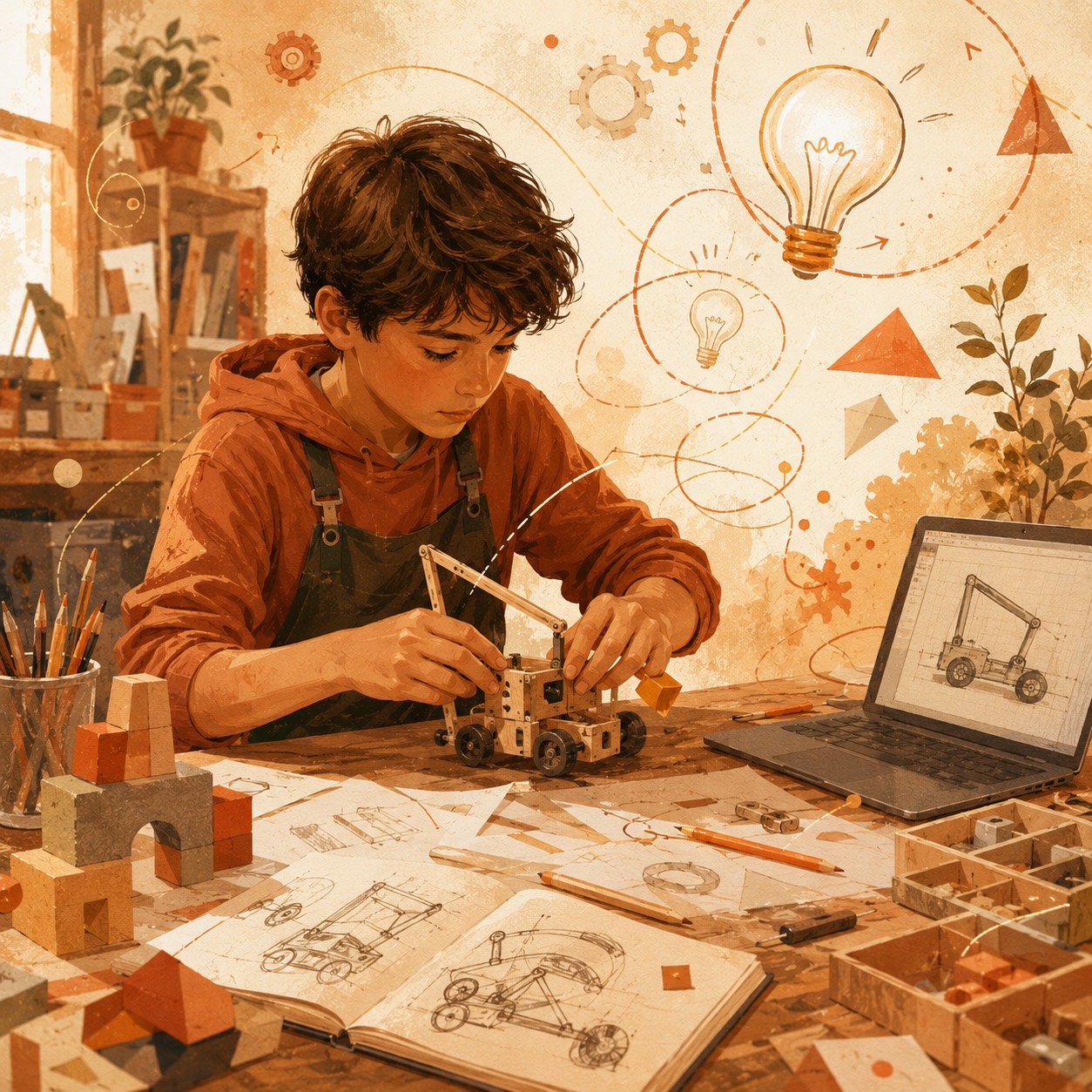
The entrepreneurial pillar. Children move from imagination to ideas to real solutions by taking initiative, testing assumptions, building prototypes, and learning through action.
Why it matters: The ability to start something, struggle through it, adapt, and create value serves a child whether they become an entrepreneur, artist, researcher, or adult who knows how to make things happen.
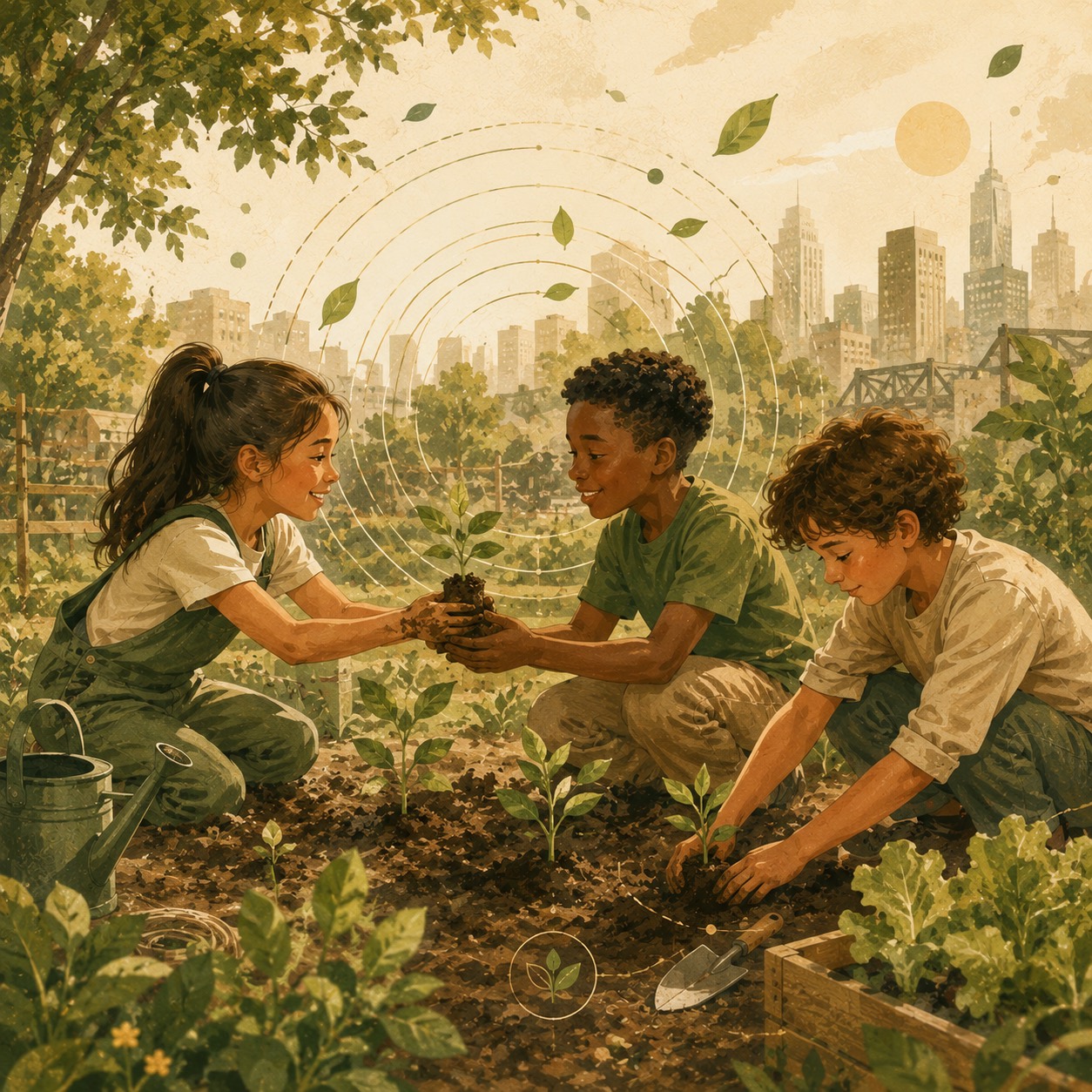
The purpose pillar. Children learn that their ideas, actions, and creations can improve life for others, society, and the planet.
Why it matters: A child who has been a contributor at age ten thinks of themselves differently for the rest of their life. The identity matters more than any single act.
The Imagine-to-Impact arc
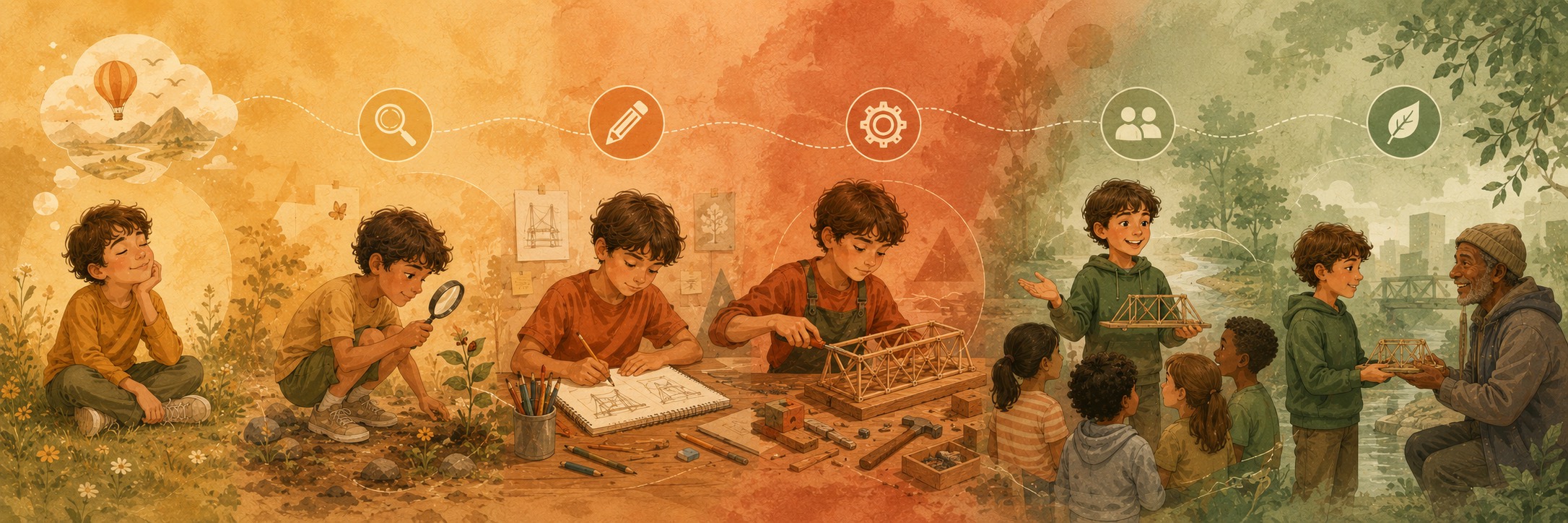
This arc is how the experiential learning cycle plays out in a BTFL program. Children begin by imagining what could be. They discover what is actually true — about people, nature, or the problem. They design a response. They build it. They make it real. And they deliver it as impact for someone other than themselves.
A child does not just attend an Adventure. A child completes a developmental arc.
How we measure growth
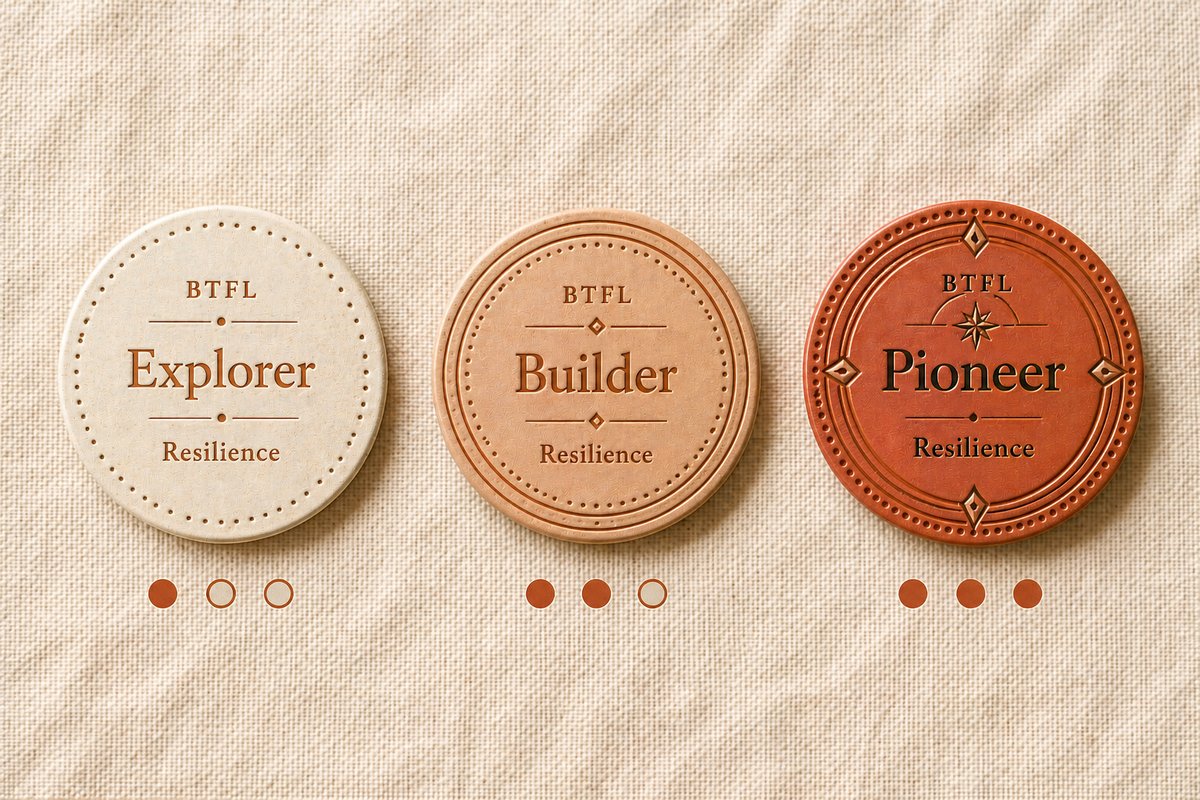
Every Adventure a child completes earns a Stamp recorded in their Passport. The founders' Field Notes accumulate alongside the Stamps, building a long-form view of how the child is growing across all three pillars. At each Waypoint, the Passport is refreshed and the Route ahead is reset.
This is not gamification for its own sake. It is a structured way to make invisible development visible to the child and meaningful to the parent.
We do not test eight-year-olds. We notice them. Every child's expedition begins with Basecamp — a two-day intensive designed by the founders, where they work with the child directly and observe them in play across the three pillars.
Parents receive the opening pages of their child's Passport: what we saw, where the strongest signals are, and the Route we'd recommend for the months ahead.
A framework is only as good as what happens in the room. Behind every BTFL program is a quality standard our team applies before any experience enters the platform.
Internally, our Adventures and partner-curation process operate against a deeper twelve-point operational standard covering Adventure design, learning arc, recognition, language, role assignment, quality ratios, and more. Parents do not see this machinery. They see Adventures that consistently feel like BTFL — and a curation promise they can trust.
Why this matters
When parents come to BTFL, they are usually responding to a quiet worry. Their child is doing well at school, but they are not sure what their child is becoming. They have signed up for enrichment classes, but they are not sure those classes add up to anything.
BTFL’s promise is that they will. We are a structured developmental journey, grounded in how human capabilities actually grow, delivered through real-world experiences, observed by people trained to see what matters, and measured in a way that respects both the child and the parent.
Who designed this
Co-founder, lead educator — Connect to World, Create, Contribute through Stewardship.
PhD in environmental electrochemistry (EPF Lausanne) with postdoctoral research at Stuttgart, Fraunhofer, and Milan Bicocca; PGCEi from Nottingham; classroom teaching at Tanglin Trust School in Singapore; contributions to the University of Cambridge’s Business Sustainability Management course.
Co-founder, lead coach — Connect to Self, Connect to Others, Create, Contribute through Enterprise.
ICF Level 2 leadership coach with 1,000+ hours, certified in Psychological Safety and Team Design. Fifteen years of corporate leadership including a decade in Singapore leading the ASEAN Innovation Hub at Bosch and heading Team and Culture Development for Bosch Business Innovations globally.
Read the full founder bios and origin story on the About page →
Every BTFL expedition begins with Basecamp — a two-day intensive run by the founders that introduces your child to BTFL, opens their Passport, and gives us the chance to understand them as an individual. From Basecamp, we write the Route for the six months ahead.
The BTFL Framework continues to evolve. We treat our system the way we ask children to treat their work: as something to be tested, learned from, and improved.

Ready to start?
BTFL opens to its first twelve children — by application — at a founding rate. Read the full Pilot page to learn what we're building, then apply if it's a fit.